Nature Camps in Prescott, AZ: What Families Should Know Before Signing Up
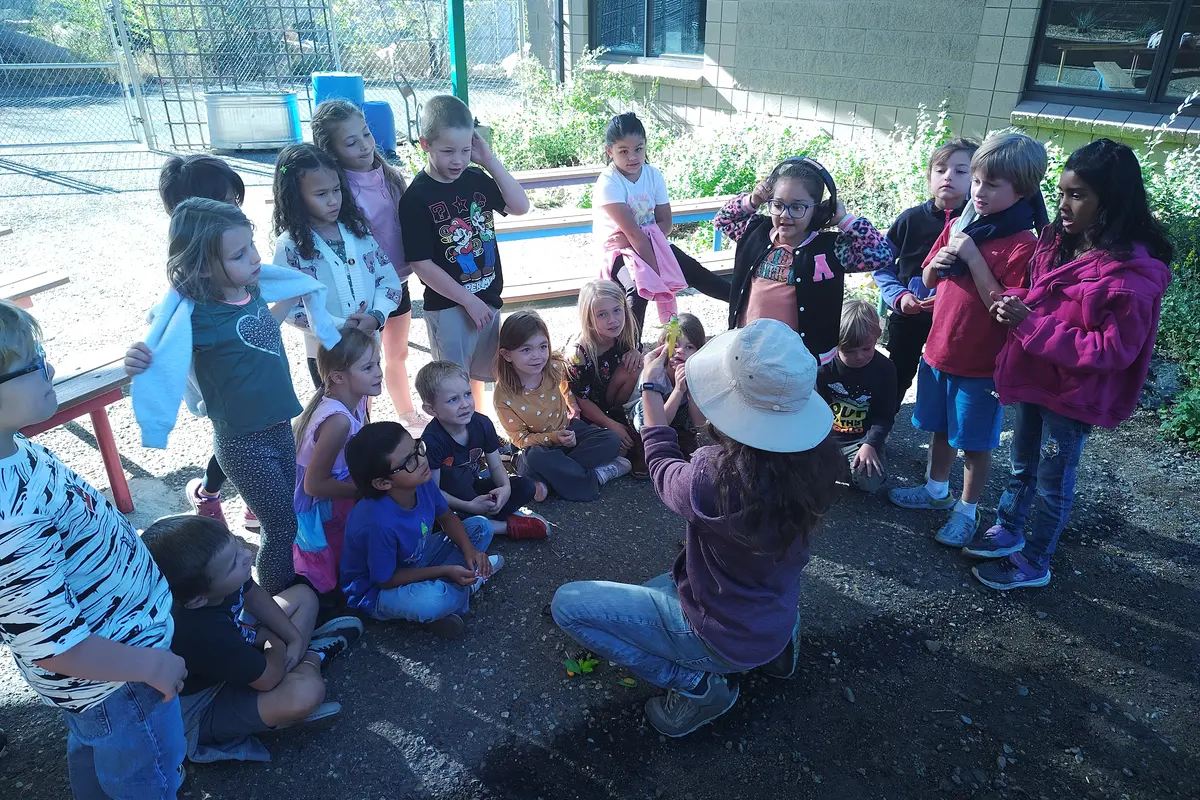
Most kids arrive at our Nature Camp having never sat quietly in a forest long enough to hear the sounds that accompany the forest. By the end of the first morning, many of them do not want to leave.
Nobody tells them nature is important. They just spend a full day in it: hiking the trails, watching a horned lizard hold perfectly still on a warm rock, pressing their hands into the bark of a ponderosa pine that smells faintly of vanilla.
At the Highlands Center for Natural History, our Nature Camps run on that premise. Children learn by being outside, not by being told about outside.
Here is what families need to know before signing up.
What Makes a Nature Camp Different from Other Summer Programs
The Prescott area has no shortage of summer camp options. Overnight camps in the Bradshaw Mountains. Sports camps. STEM programs. Faith-based retreats. Each one serves a real purpose.
Nature camp at the Highlands Center is a day program with a specific focus: the Central Arizona Highlands and what lives in it.
Campers do not just hike. They observe. They ask questions. They journal. They identify plants and insects. They watch how light changes through the ponderosa canopy at different times of morning. Our educators design each day around the natural world that surrounds our 80-acre campus inside Prescott National Forest, and the programming changes with the season.
A 2022 systematic review published in Frontiers in Public Health, covering 147 studies across 20 countries, found that nature-specific outdoor learning produces measurable benefits in student engagement, social skills, self-concept, and academic performance. The researchers specifically noted that curricular lessons taught in outdoor settings showed the highest quality of results across the studies reviewed.
Nichole Trushell, the Highlands Center’s founding director, watched this pattern repeat for years. “The kid that was often labeled as the problem kid in the classroom, or the kid that wasn’t engaged in learning,” she said, “if we could get them out here for a day, it would flip. They would often become the successful kid, the knowledgeable kid, the head of the class kid.”
The child who cannot sit still in a classroom will often crouch silently over a beetle colony for twenty minutes without being asked.
Who Nature Camp Is For
Our Nature Camps are designed for ages 3 to 13. That is a wide range, and we structure programs intentionally by age group so a five-year-old and a twelve-year-old are not doing the same activities.
Ages 3 to 5. Younger campers spend time in Forest Play and on shorter trail sections. Activities focus on observation with all five senses: touching bark, listening for birds, smelling crushed juniper leaves, looking closely at small things. The pace is slow. That is deliberate.
Ages 6 to 9. This group starts building vocabulary for what they see. Common names of local plants and animals. Journaling and sketching. The kinds of questions that lead somewhere: why does this plant grow here and not there? What made this track?
Ages 10 to 13. Older campers go deeper into identification, ecosystem relationships, and longer hikes. They also start taking some responsibility for younger campers and for the trail itself. Stewardship stops being an abstract idea pretty quickly when you are the one picking up a piece of trash on a trail you have walked a dozen times.
Camp is a day program. Campers arrive in the morning and return home in the afternoon. Verify current session times, dates, and age group availability at Youth Nature Camps page before registering, as schedules vary by season.
What a Typical Camp Day Looks Like
There is no typical day, exactly, because the forest changes. But the structure stays consistent.
Mornings start outside. Campers gather, and our educators set the day’s focus: fungi, birds, geology, insects, plants in bloom, whatever the season offers. That topic threads through everything that follows.
Then the group moves. On our trails through ponderosa pine, along Lynx Creek, into the chaparral, through the James Family Discovery Gardens. Educators stop when something interesting appears. A scat on the trail. A woodpecker hole in a dead snag. A spider web still holding dew. These moments are not interruptions. They are the lesson.
Midday gives campers time to eat, rest, and sketch or write in their journals. Afternoons include games rooted in ecology: predator-and-prey simulations, plant identification challenges, sensory walks where campers close their eyes and simply listen.
The day ends back at the gathering point. The question is always the same: what did you notice today? The answers are usually better than anything on the morning’s lesson plan.
Jules Galan – Education Manager “We spend the day outside. We are hiking. We are exploring. Just like we foster taking care of the land, we will also take care of your camper.”
What Sets Highlands Center Nature Camps Apart
There are other day camps in Prescott. Here is what is specific to ours.
The setting is the curriculum. Our campus sits inside Prescott National Forest on a Special Use Permit. Campers are not in a park or on a maintained lawn. They are in the forest, with all the variety that brings: different plant communities within a short walk, a riparian corridor along Lynx Creek, and direct trail connections to the Lynx Lake Recreation Area. The Central Arizona Highlands contain five distinct plant zones within a small geographic area, and our educators move campers through all of them over the course of a session.
Small groups. We keep group sizes small so educators can spend time with individual campers, answer real questions, and notice what each child is responding to. This is not a camp where children disappear into a crowd.
Educator-designed programming. Our camps are not purchased curricula. Our educators design the programming based on what is actually happening in the forest that week: what is flowering, what is active, what tracks appeared on the trail overnight. That specificity is harder to replicate than a worksheet, and children feel the difference.
A place campers come back to. Many of our campers first visited the Highlands Center on a school field trip in second or fourth grade. They come to Nature Camp. Some of them later return as teen interns through our Teen Internship Program, a free summer leadership experience for ages 14 to 17. The relationship with this place builds over years. We think that matters.
What to Bring and How to Prepare Your Child
Here is what you can do to help your child have a good first day.
Clothing. Dress for the outdoors and for weather that can change. Mornings in the ponderosa pines are often cool even in summer. A light layer and close-toed shoes are the baseline. Sandals and flip-flops are not appropriate for trail hiking.
Water. Bring more than you think is needed. Children hiking in Arizona move through water quickly, even at elevation.
Sun protection. Hat and sunscreen. Our trails offer shade, but not all day.
A small notebook. Not required, but children who bring something to draw or write in tend to use it. A nature journal started at camp often continues at home.
Expectations. Nature camp is not a theme park. Some children arrive expecting constant organized activity and need a few days to settle into a slower pace. That adjustment is part of the experience. Children who rarely go outside often get the most out of it once it clicks, which usually happens somewhere on the second day.
Nichole Trushell, who spent years teaching children on these trails, used to tell skeptical adults the same thing: “Kids can sit just fine for 20 minutes. Something magical is going to happen if you can just be still. You could count on that being true.”
How to Register
Nature Camp spots fill. Summer sessions at the Highlands Center reach capacity, and families who wait until June often find July already closed.
Registration opens seasonally. Current session dates, age group availability, pricing, and the registration link are at Nature Camps page. If a session shows as full, check back. Cancellations happen. Joining a waitlist is worth doing.
If cost is a barrier, contact us directly through the website. We are a nonprofit. We want children outside regardless of financial situation, and we do our best to make that possible.
Other Ways to Get Kids Outside at the Highlands Center
Nature Camp is one way in. It is not the only one.
Discovery Saturdays. Free monthly learning stations in the James Family Discovery Gardens. No registration required for most dates. A low-pressure way to see what we do before committing to a full camp session.
Forest Play Thursdays. A free morning program for children ages 0 to 5 and their families. Stories, games, and time in the forest. Spots are limited. Check Early Childhood Education Page for current dates and availability.
School field trips. If your child’s teacher has not yet brought a class to the Highlands Center, share this with them. We offer field trips from kindergarten through eighth grade, and our educators design each trip around the science standards for that grade level.
The ponderosa pines are here in June. They are here in July. The beetles, the lizards, the creek, the hawks riding a thermal at midday. Our educators stop at all of it, crouch down when it is worth crouching, and ask the same question every time: what do you notice?
If your child has never spent a full day in the forest, that is reason enough to sign them up.
View current Nature Camp sessions and register at Youth Nature Camps.